Data Analytics in Digital Marketing: Insights and Growth
Ever feel like digital marketing is a game of trial and error? You’re not alone! But what if there was a way to remove the guesswork and make every decision backed by solid data? That’s where data analytics steps in.
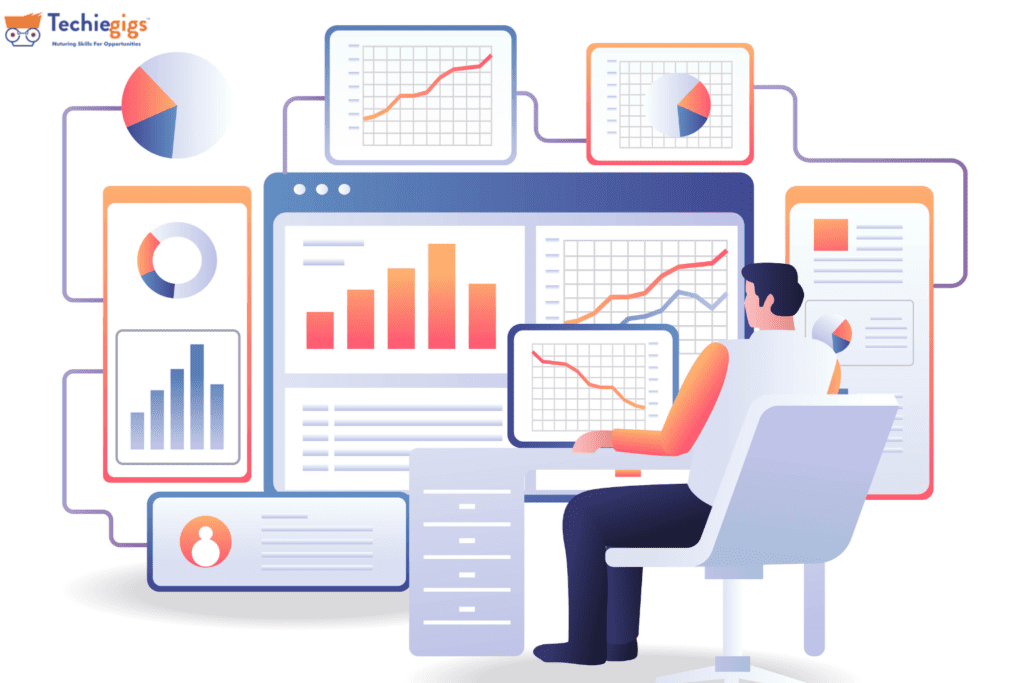
In today’s digital age, businesses can’t afford to rely on gut feelings or assumptions. Data analytics transforms raw numbers into actionable insights, helping marketers understand their audience, optimize campaigns, and maximize ROI. Whether you’re fine-tuning ad spend, personalizing content, or tracking engagement, data is your best friend.
So, how exactly does data analytics revolutionize digital marketing? And how can businesses use it effectively? This guide will break it all down—covering everything from key components and tools to real-world case studies and practical steps for implementation. Let’s dive in!
1. Understanding Data Analytics in Digital Marketing
What is Data Analytics in Digital Marketing?
Data analytics in Digital marketing refers to the process of collecting, analyzing, and utilizing data to refine marketing strategies and improve decision-making. It allows businesses to track customer behavior, assess campaign performance, and optimize digital efforts based on factual insights rather than guesswork. With the right data, marketers can identify trends, predict consumer behavior, and make informed decisions that drive better engagement and higher revenue.
The Role of Data Analytics in Marketing
1. Audience Targeting:
Businesses can analyze demographic, behavioral, and psychographic data to identify their ideal customer profiles.
By segmenting their audience based on age, location, interests, purchase behavior, and online activity, brands can create hyper-targeted marketing campaigns that resonate with specific groups.
Example: E-commerce brands use purchase history and browsing behavior to offer personalized product recommendations, increasing the chances of conversion.
2. Personalization:
Data analytics enables brands to tailor messages, offers, and product recommendations for individual users.
Marketers can use data from past interactions to predict what a customer is likely to engage with next, improving customer experience.
Example: Netflix suggests shows based on users’ past viewing behavior, leading to longer watch times and increased subscription retention.
3. Campaign Optimization:
Data analytics allows marketers to fine-tune their ad spending, bidding strategies, and content placement to maximize ROI.
Marketers can test different ad variations (A/B testing), analyze user responses, and adjust strategies in real time.
Example: Google Ads data helps businesses adjust ad copy and keywords for better conversions, reducing cost per acquisition (CPA) while increasing engagement.
4. Competitive Analysis:
Companies can analyze market trends and competitors’ performance to refine their own strategies.
By monitoring competitors’ ad spend, keyword rankings, and social media engagement, brands can identify gaps in their own marketing efforts.
Example: Coca-Cola leverages social media analytics and AI to track consumer sentiment and engagement, helping them refine their branding and promotional strategies.
5. Measuring ROI:
Marketers can track KPIs like cost per acquisition (CPA), conversion rates, and return on ad spend (ROAS) to determine the effectiveness of their campaigns.
Data analytics provides detailed insights into which marketing channels are delivering the highest return, allowing businesses to reallocate budgets for better performance.
Example: Amazon tracks customer purchase behavior to improve its recommendation engine, boosting sales and retention by providing highly relevant product suggestions.
2. Key Components of Marketing Analytics
Data Collection
The first step in marketing analytics is gathering relevant data from multiple sources. This includes website visits, social media interactions, email responses, ad impressions, CRM databases, and third-party data providers.
Marketers rely on tools like Google Analytics, Adobe Analytics, HubSpot, and social media insights (Facebook Insights, Twitter Analytics, LinkedIn Analytics) to collect real-time and historical data. Customer relationship management (CRM) platforms also provide deep insights into customer interactions and preferences.
Additionally, businesses can use heatmaps, session recordings, and customer surveys to understand how users interact with websites and marketing campaigns.
Data Processing & Interpretation
Once the data is collected, it must be cleaned, structured, and processed to make it usable. This involves:
Removing duplicate entries and fixing inconsistencies.
Categorizing data points into meaningful segments (e.g., new vs. returning customers).
Applying AI-driven analytics to detect trends and anomalies.
Advanced data analytics tools can provide automated insights, allowing marketers to identify high-performing channels, detect customer drop-off points, and optimize marketing budgets accordingly.
Selecting the Right KPIs
Not all data points are valuable. To make informed decisions, marketers must focus on actionable Key Performance Indicators (KPIs) rather than vanity metrics. Here are some critical KPIs that drive marketing success:
Conversion Rate: Measures the percentage of visitors who take a desired action (purchase, sign-up, download, etc.).
Customer Lifetime Value (CLV): Predicts the total revenue a business can generate from a single customer over time.
Click-Through Rate (CTR): Evaluates the effectiveness of ad creatives and email campaigns.
Bounce Rate: Determines how engaging a website or landing page is by measuring visitors who leave without interacting.
Cost Per Acquisition (CPA): Calculates how much it costs to acquire a new customer through different marketing channels.
Return on Ad Spend (ROAS): Measures the revenue generated per dollar spent on advertising.
Using real-time dashboards and automated reporting, marketers can continuously track these KPIs and adjust strategies for better performance.
3. Steps to Implement Data Analytics in Your Marketing Strategy
Step 1: Set Clear Objectives
Before diving into analytics, businesses must define their goals. Whether it’s increasing brand awareness, boosting conversions, or improving engagement, having a clear goal ensures data analysis aligns with business objectives. Without well-defined objectives, marketers may collect excessive data without extracting meaningful insights.
Step 2: Choose the Right Analytics Tools
With a variety of analytics tools available, selecting the right ones is crucial. Popular options include:
Google Analytics – Tracks website traffic, user behavior, and conversion funnels.
Adobe Analytics – Provides advanced customer journey tracking and real-time data analysis.
Semrush & BuzzSumo – Helps in SEO optimization, content marketing insights, and competitor analysis.
HubSpot & Salesforce – Assists in CRM and lead tracking, improving customer engagement and sales forecasting.
Hotjar & Crazy Egg – Provides heatmaps and user session recordings for UX improvements.
Step 3: Collect & Integrate Data
Marketing data comes from various sources, including social media, website traffic, paid ads, and CRM platforms. By integrating data from multiple touchpoints, businesses gain a holistic view of their audience’s behavior.
Use Google Tag Manager to streamline tracking across multiple platforms.
Leverage APIs and third-party integrations to combine insights from different analytics tools.
Implement cross-channel tracking to understand customer interactions across email, ads, and website visits.
Step 4: Analyze Patterns & Trends
Once data is collected, the next step is analyzing trends to optimize marketing strategies. Predictive analytics tools can help marketers:
Identify customer behaviors and preferences.
Detect seasonal trends to plan campaigns in advance.
Analyze customer churn rates and take preventive actions.
Understand the best-performing marketing channels for higher ROI.
Step 5: Apply Insights to Optimize Marketing Efforts
The power of data analytics lies in its application. Marketers must:
Refine content strategies by identifying which formats and topics perform best.
Optimize ad spend by reallocating budgets based on conversion rates.
Personalize email campaigns using customer segmentation and behavioral triggers.
A/B test marketing campaigns to compare performance and make data-driven improvements.
Step 6: Measure, Iterate & Refine Strategies
Marketing analytics is not a one-time process; it requires continuous monitoring and refinement. Businesses should:
Establish a regular reporting system to track key metrics.
Use real-time dashboards for instant insights.
Adjust strategies dynamically based on new trends and market shifts.
Foster a data-driven culture where marketing decisions are consistently backed by analytics.
4. Case Studies & Real-World Examples
1. Amazon: Personalized Recommendations
Amazon’s recommendation engine analyzes purchase history, browsing behavior, and customer preferences to provide highly personalized product suggestions, increasing customer retention and boosting sales.
2. Netflix: Content Optimization
Netflix uses AI-powered predictive analytics to analyze watch time, genre preferences, and user ratings to determine what content to license, create, or recommend, ensuring better user engagement.
3. Coca-Cola: Sentiment Analysis
Coca-Cola utilizes real-time social media monitoring to track brand sentiment, helping them adjust marketing campaigns instantly to capitalize on trends and enhance consumer perception.
4. Airbnb: Data-Driven Marketing
By analyzing user search behavior, seasonal demand, and booking patterns, Airbnb optimizes its pricing strategy, email marketing campaigns, and ad placements for higher conversions.
5. SimpleSite: Ad Performance Enhancement
SimpleSite used data-driven insights to refine ad targeting, bid strategies, and audience segmentation, leading to a 20% increase in ROI and improved marketing efficiency.
5. Tools and Technologies for Marketing Analytics
1. Web Analytics Tools
Google Analytics – Tracks website traffic, user behavior, and conversions.
Semrush – Helps with keyword research, backlink analysis, and competitive insights.
BuzzSumo – Identifies high-performing content and tracks social shares.
3. CRM & Customer Data Management
HubSpot – Provides lead tracking, email marketing insights, and customer segmentation.
Salesforce – Manages customer relationships and sales pipeline data.
4. Ad Performance & Attribution Tools
Cometly – Tracks paid ad performance across platforms.
Google Ads – Measures campaign performance and conversion rates.
5. User Experience & Heatmap Tools
Hotjar – Provides heatmaps, session recordings, and feedback polls.
Crazy Egg – Helps visualize user behavior on websites.
6. AI & Predictive Analytics Tools
Tableau – Converts raw data into interactive dashboards.
IBM Watson Analytics – Uses AI-driven insights for forecasting trends.
6. Challenges and Considerations in Data-Driven Marketing
1. Over-Reliance on Tools
While analytics tools provide valuable insights, human intuition and expertise remain critical in interpreting data and making strategic decisions. Blindly following data without contextual understanding can lead to misinformed strategies.
2. Data Privacy & Compliance
With increasing regulations like GDPR, CCPA, and other data protection laws, businesses must ensure ethical and legal data handling. Companies need to be transparent about how they collect and use customer data while obtaining proper consent.
3. Avoiding Vanity Metrics
Many businesses fall into the trap of focusing on surface-level metrics such as likes, impressions, and follower counts instead of actionable insights like conversion rates, customer retention, and engagement quality.
4. Integration of Data Sources
With multiple data points across different platforms, businesses often struggle with fragmented data. A unified approach using integrated analytics tools can help centralize and analyze data more effectively.
5. Adapting to Changing Consumer Behavior
Trends in digital marketing evolve rapidly. Businesses must continuously update their analytics strategies to reflect shifts in consumer preferences, emerging platforms, and new technologies like AI and machine learning.
7. Conclusion
Data analytics has revolutionized digital marketing, allowing businesses to make smarter, data-driven decisions. Whether it’s optimizing ad spend, enhancing audience targeting, or improving customer engagement, the power of analytics cannot be ignored.
To stay ahead of the competition, marketers must embrace analytics, choose the right tools, and continuously refine their strategies based on data insights. By doing so, they can ensure higher ROI, better customer experiences, and long-term success in the digital landscape.
We use cookiesEssential cookies keep the site working. With your permission we also use analytics and marketing cookies to understand visits and measure our ads. Read our Privacy Policy.