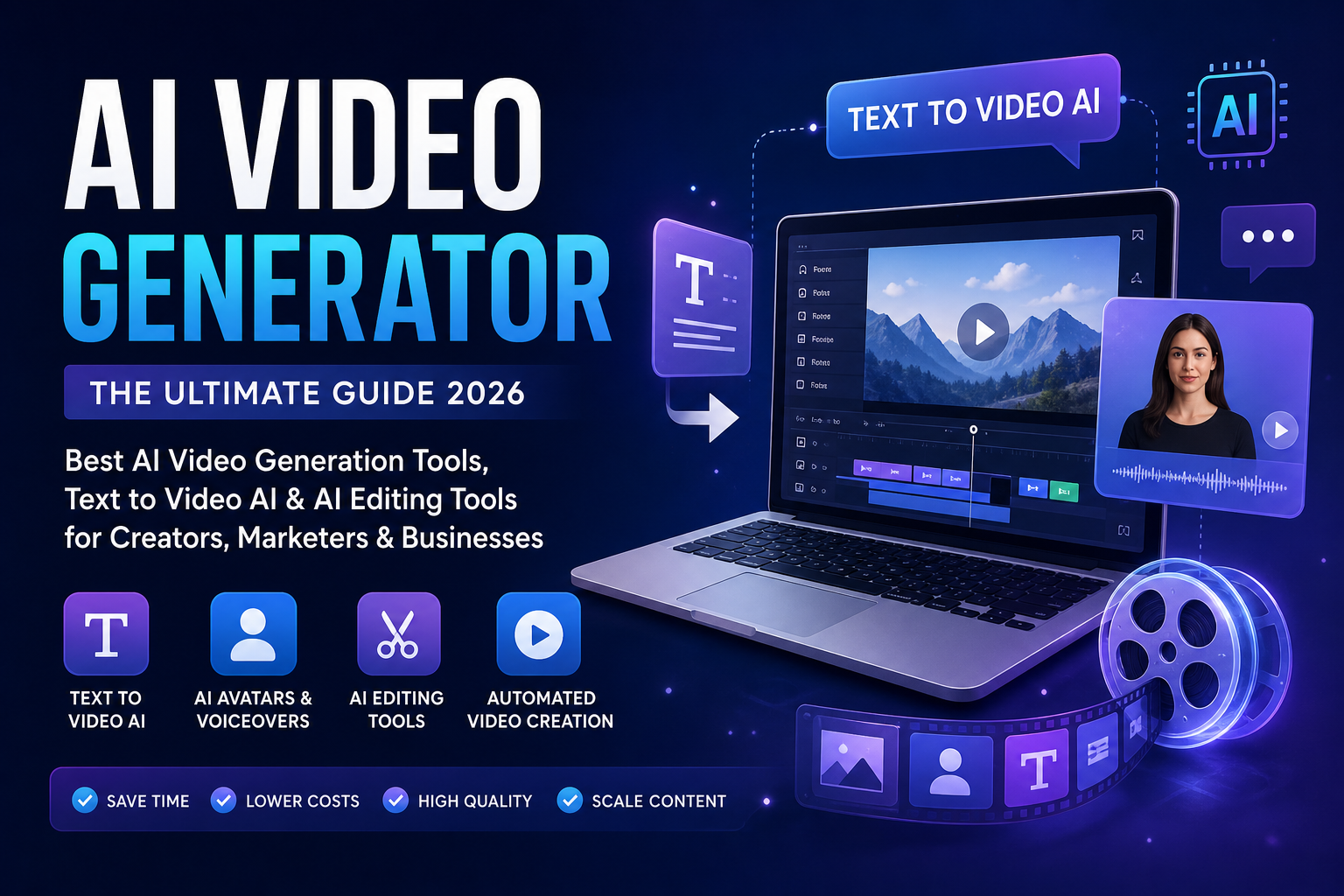
The barrier to creating professional video content has collapsed. What once required a production crew, a studio, expensive software licenses, and weeks of editing now takes a text prompt and a few minutes of computing time. The engine behind this transformation is the AI video generator — a category of artificial intelligence tools that can synthesize, animate, edit, and render video content from scratch, from images, or from written descriptions alone.
Whether you are a solo content creator looking to scale your output, a marketing team trying to slash production budgets, a filmmaker exploring new creative territory, or an educator building engaging course materials, AI video generation tools have something significant to offer you in 2026.
This guide provides an authoritative, in-depth look at the AI video generation landscape — covering foundational concepts, the best platforms in each category, real-world applications, and an honest discussion of where these tools still fall short.
TL;DR
AI video generators have moved from novelty to necessity. In 2026, you can type a sentence and receive a professionally edited, fully rendered video clip in minutes. This article breaks down:
- What AI video generators are and how they work
- The best text to video AI platforms available today
- How AI editing tools are replacing traditional post-production workflows
- Practical use cases, limitations, and future trends
- Answers to the most frequently asked questions
Table of Contents:
- What is an AI Video Generator?
- Types of AI Video Generators
- Leading AI Video creation Platforms in 2026
- FAQs
- The Future of Text to Video AI
- Conclusion
What is an AI Video Generator?
An AI video generator is a software system powered by machine learning models — typically diffusion models, transformer architectures, or a hybrid of both — that can produce video content based on various types of input. These inputs may include plain text prompts, still images, audio tracks, existing video clips, or combinations thereof.
Modern AI video generators differ fundamentally from traditional video editing software. Conventional tools like Adobe Premiere or DaVinci Resolve are instruments — they require a skilled human operator to assemble and manipulate existing footage. AI video generators, by contrast, are generative: they produce entirely new visual content from learned representations of the world, trained on vast datasets of images, video, and associated metadata.
The underlying technology has advanced remarkably since the rudimentary GAN-based video synthesis of the early 2020s. Today’s leading systems use latent diffusion models that operate in compressed representation spaces, enabling them to generate high-resolution, temporally coherent video at lengths previously impossible to achieve. Spatial and temporal attention mechanisms ensure that objects, lighting, and motion remain consistent across frames — one of the most technically challenging aspects of AI video generation.
Types of AI Video Generators
1. Text to Video AI Tools
Convert written content into videos automatically.
Best for:
- Bloggers
- Marketers
- Educators
2. AI Avatar Video Generators
Create videos with virtual human presenters.
Best for:
- Corporate training
- Explainer videos
- Customer support content
3. AI Animation Generators
Generate animated videos without manual design.
Best for:
- Storytelling
- Kids content
- Explainers
4. AI Editing Tools
Enhance and edit videos automatically.
Best for:
- YouTubers
- Video editors
- Social media creators
Leading AI Video creation Platforms in 2026
- Runway Gen-3 Alpha
- OpenAI Sora
- Kling AI
- Pika Labs
- Synthesia
- HeyGen
- Descript
- Leonardo AI
- Google Veo 3 (& Veo 3.1)
- Pictory AI
- Adobe Firefly Video
1. Runway Gen-3 Alpha
Runway is widely regarded as the gold standard AI video generator for creative professionals. Gen-3 Alpha delivers stunning photorealistic video from text prompts, image inputs, or reference clips, with precise control over camera motion (pan, zoom, dolly), style, and lighting. It supports up to 10-second high-resolution clips per generation and features an intuitive web-based interface. Runway’s “Motion Brush” allows users to paint motion onto still images — a feature with no equivalent elsewhere. Film studios and advertising agencies use Runway to prototype scenes, generate B-roll, and create VFX elements. Its consistency engine ensures characters and environments look the same across multiple shots, making it viable for narrative projects.
- Text to video
- Image to video
- Motion brush
- Camera controls
- Style transfer
- 4K upscaling
2. OpenAI Sora
Sora is OpenAI’s landmark text to video AI model, capable of generating up to one-minute videos with complex multi-scene narratives, realistic physics simulation, and nuanced character motion. What distinguishes Sora from competitors is its grasp of how the physical world behaves — objects interact with gravity, light bounces realistically off surfaces, and crowds move with organic unpredictability. Sora also supports video extension (extending an existing clip forward or backward), inpainting (editing specific regions of a video), and creating videos from still images. It is available via ChatGPT Plus and Pro plans, with API access for enterprise. For marketers and filmmakers needing the most photorealistic output currently possible, Sora is the benchmark.
- 60-sec clips
- Physics simulation
- Video extension
- Inpainting
- Image to video
- Storyboard mode
Kling AI

Developed by Kuaishou Technology, Kling AI burst onto the scene as a serious Sora competitor with impressive motion quality and generous output lengths — up to two minutes per clip. It handles complex human movement particularly well, making it popular for fashion, dance, and sports content. Kling also features a “virtual try-on” mode where users can see how clothing looks in motion, and its “Elements” system lets creators combine characters, backgrounds, and props from separate reference images into a single coherent scene. The free tier offers a meaningful number of credits per day, making it the most accessible high-quality text to video AI for individual creators on a budget.
- 2-min clips
- Human motion
- Virtual try-on
- Multi-element scenes
- High free tier
Pika Labs
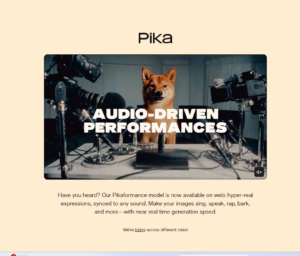
Pika is the AI video generator built for speed and social media creators. Its interface is
deliberately simple — paste a prompt, pick a style (cinematic, anime, cartoon, 3D), and generate. Pika 2.0 introduced “Pikaffects,” a library of dynamic video effects (explosions, melting, morphing, deflation) that users can apply to any image or video with a single click.
It supports aspect ratios optimized for TikTok, Instagram Reels, and YouTube Shorts, and integrates with Canva for seamless design workflows. For content creators who need a constant stream of engaging short-form video, Pika is the most frictionless option. Its AI editing tools include background removal, object tracking, and style transfer on existing footage.
- Social-first formats
- Pikaffects library
- Canva integration
- Style presets
- Object tracking
Synthesia

Synthesia is the leading AI video generator for business, specializing in avatar-based video production. Users type a script, select one of 230+ photorealistic AI avatars, choose a voice from 120+ languages, and Synthesia produces a polished talking-head video — no camera, studio, or actor required. It is the go-to platform for HR training videos, product onboarding, corporate communications, and e-learning modules. Synthesia’s “Personal Avatar” feature lets organizations create a custom avatar of their own staff with just 5 minutes of footage. Version 2.0 added multi-avatar scenes, screen recording integration, and an interactive video feature that lets viewers navigate branching video experiences. Compliance-focused enterprises appreciate its SOC 2 Type II certification.
- 230+ AI avatars
- 120+ languages
- Custom avatars
- Branching video
- LMS integration
- SOC 2 certified
HeyGen
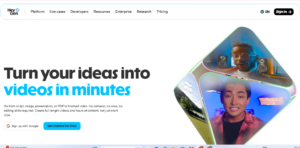
HeyGen sits at the intersection of text to video AI and avatar technology, with a particular focus on video translation and localization. Its “Video Translate” feature takes any existing video, translates the script into another language, and lip-syncs the on-screen speaker to the new audio — a genuinely transformative capability for global content distribution. HeyGen supports over 175 languages and dialects. It also offers a streaming avatar API that enables real-time AI avatar video calls — useful for customer service automation, virtual assistants, and interactive demos. Creators can build a personal avatar from a single selfie video and use it across unlimited projects. HeyGen is a top choice for e-commerce brands, course creators, and multinational companies.
- 175+ languages
- Lip-sync translation
- Streaming avatar API
- Real-time video calls
- Selfie avatar
Descript

Descript is the premier AI editing tool for podcasters, YouTubers, and video producers. Rather than a traditional timeline editor, Descript treats your video like a text document — edit the transcript and the video edits itself. Its AI features include “Overdub” (clone your voice to fix recording mistakes by typing), automatic filler-word removal (“um,” “uh,” “like”), silence compression, and AI-powered clip creation that identifies the most engaging moments and auto-generates short clips for social media. Descript also supports screen recording, multi-track mixing, and remote recording of guests in HD. It is not a text to video AI in the generative sense, but as an AI editing tool that supercharges existing footage, it is unmatched for spoken-word content.
- Text-based editing
- Voice cloning
- Auto filler removal
- AI clip creation
- Remote recording
Leonardo AI

Leonardo AI is a powerful generative AI platform designed for creating images, animations, and videos using simple text prompts. Originally launched as an image-generation tool, it has evolved into a full AI video generator with features like text to video AI, image animation, and advanced AI editing tools.It was founded in 2022 and later became part of Canva, expanding its capabilities into a broader creative ecosystem.
The platform is widely used by:
- Designers
- Marketers
- Content creators
- Game developers
Google Veo 3
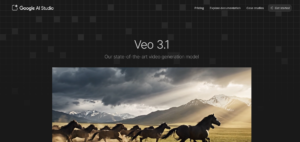
Google Veo 3 is a state-of-the-art text to video AI model developed by Google DeepMind, and the first AI video generator to produce native, synchronized audio alongside video in a single generation pass.Rather than layering background music over silent footage as most competitors do, Veo 3 generates dialogue, sound effects, and ambient environmental noise that is physically coherent with the visuals — a rainy street sounds like a rainy street, footsteps match the character’s gait, and spoken lines sync to lip movements.
The model runs at up to 4K resolution, understands complex cinematic language (lighting style, camera movement, shot framing, pacing), and maintains strong character consistency across sequences using its “Ingredients to Video” feature — where up to three reference images anchor the appearance of characters, objects, and scenes. Veo 3 is accessible through the Gemini app, Google AI Studio, the Gemini API, and Vertex AI for enterprise deployments.
- Native audio generation
- 4K resolution
- Lip-sync dialogue
- Ingredients to Video
- First/last frame control
Pictory AI

Pictory AI is one of the most popular tools in the AI video generator space, especially known for turning written content into engaging videos with minimal effort. It’s designed for marketers, bloggers, YouTubers, and businesses who want to scale video content without complex editing.
- Analyze your content
- Select relevant visuals
- Add voiceovers and captions
- Create a complete video
Adobe Firefly
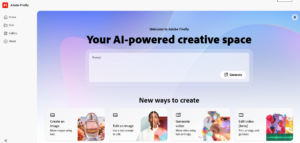
Adobe Firefly Video is part of Adobe’s growing suite of generative AI tools, designed to help creators produce high-quality videos using simple prompts, images, or text. Built with creativity and commercial safety in mind, Firefly brings powerful AI video generator capabilities into the familiar Adobe ecosystem.
- Text-to-video generation
- AI-powered scene creation
- Automatic video enhancements
- Smart editing workflows
Challenges of AI Video Generators
1. Limited Creativity
AI may lack human storytelling depth.
2. Generic Content
Templates can feel repetitive.
3. Accuracy Issues
AI may misinterpret context.
4. Ethical Concerns
Deepfakes and misuse risks.
FAQ
Q. Can AI replace video editors?
AI can automate many tasks, but human creativity is still essential for storytelling and branding.
Q. Are AI-generated videos good for SEO?
Yes, videos improve engagement, dwell time, and search rankings when optimized properly.
Q. How accurate are AI video generators?
They are improving rapidly, but may still require manual editing for best results.
Q. What industries benefit from AI video tools?
Marketing, education, e-commerce, media, and corporate sectors benefit the most.
Q. Do AI video tools support multiple languages?
Yes, many tools offer multilingual voiceovers and subtitles.
The Future of Text to Video AI
The pace of progress in text to video AI is staggering. In early 2024, the best models could manage three seconds of shaky footage before characters morphed into abstract shapes. By late 2025, Sora and Runway Gen-3 were producing minute-long clips that passed casual inspection. By 2026, multi-scene narrative videos with consistent characters, natural dialogue, and synchronized audio are within reach for consumer tools.
The next frontier is real-time generation — AI video that renders at the speed of a live broadcast, enabling interactive video experiences, AI-powered live streaming, and dynamic personalized advertising. HeyGen’s streaming avatar API is an early glimpse of this future. Several research labs are also working on world models that can generate not just video, but interactive 3D environments from text — effectively turning text to video AI into text to virtual world AI.
For businesses and creators, the practical implication is clear: video production costs will continue to fall dramatically, the barrier to producing professional-quality content will keep lowering, and the competitive advantage will shift from production capability to creative strategy and distribution.
Book a free counselling session with an academic counsellor for our AI-powered Niche Specific Digital Marketing course to master these frameworks today.