In 2026, the digital marketing landscape has transformed dramatically. With AI reshaping how marketers work, employers now expect fresh graduates and career changers to demonstrate not just knowledge, but practical, measurable results. This is where your portfolio for digital marketing for freshers becomes your most powerful asset.
A portfolio for digital marketing for freshers isn’t just a collection of pretty screenshots—it’s your professional resume in action. According to LinkedIn’s 2024 Jobs Report, 73% of hiring managers in marketing prefer candidates with demonstrated experience over degrees alone. Your AI digital marketing portfolio is that proof.
This comprehensive guide walks you through building a portfolio project for marketers that attracts attention from top brands, agencies, and startups—regardless of your current experience level.
TL;DR
- AI digital marketing portfolio showcases your skills through real or simulated projects
- Freshers can build portfolios using self-initiated, mock, or freelance projects
- Focus on key areas like SEO, social media, paid ads, and content marketing
- Use AI tools to enhance your projects and productivity
- Always show results, strategy, and insights—not just visuals
- Publish your portfolio on platforms like personal websites or portfolio builders
- Keep updating your portfolio regularly to stay relevant
Table of Contents:
- Why You Need a Digital Marketing Portfolio
- Understanding What Makes a Strong Digital Marketing Portfolio
- Steps to make your portfolio
- Choose the Right Platform for Your Portfolio
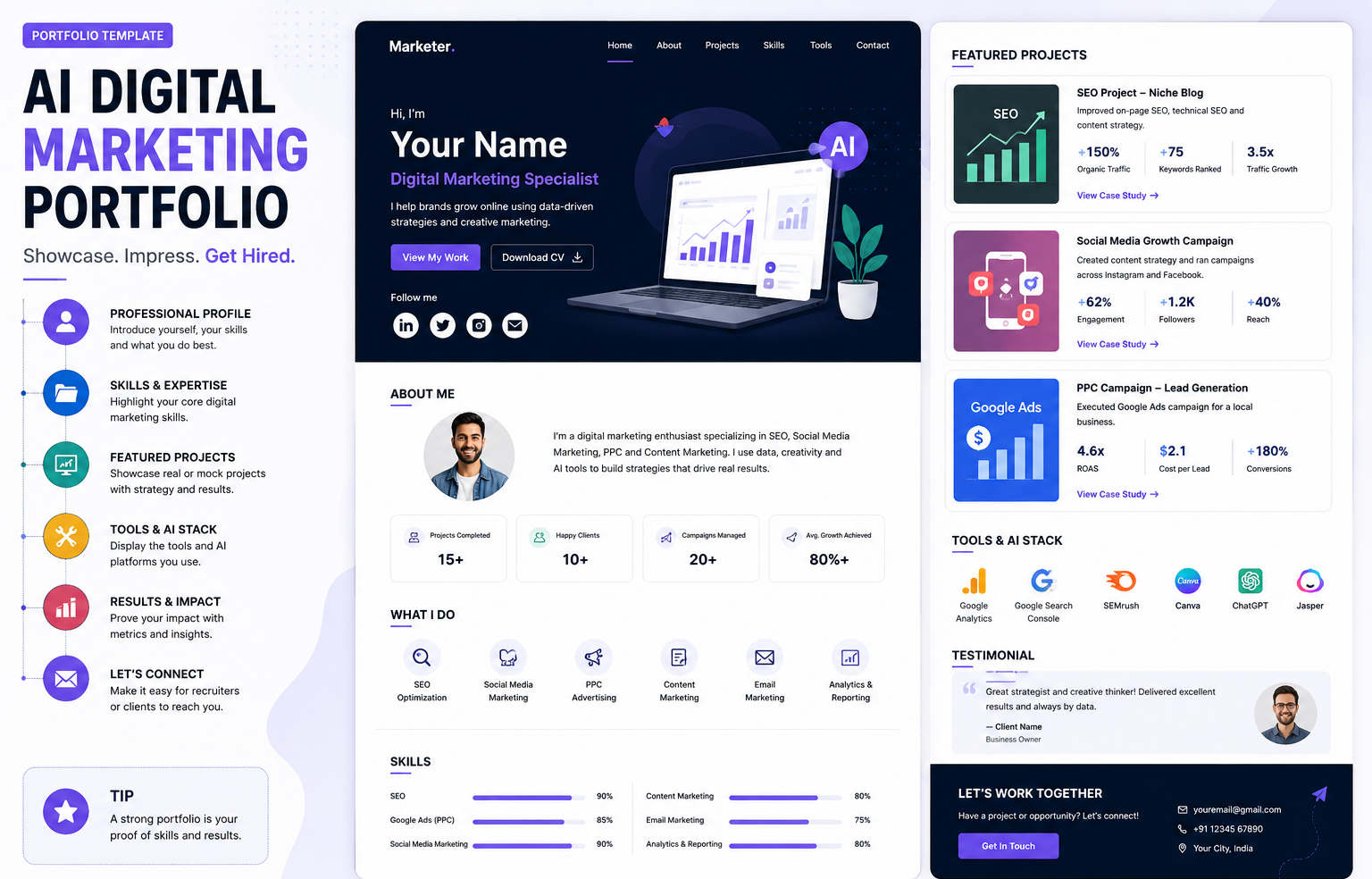
- What to Include in Your Portfolio Website
- Common Mistakes to Avoid
- FAQs
- Conclusion
Why You Need a Digital Marketing Portfolio
If you’re a beginner, a resume alone won’t help you stand out. Employers want to see:
- Can you run campaigns?
- Do you understand strategy?
- Can you generate results?
A portfolio for digital marketing for freshers answers all these questions.
It shows:
- Practical knowledge
- Creativity
- Analytical thinking
- Real-world application of skills
Think of it as your digital proof of work.
Understanding What Makes a Strong Digital Marketing Portfolio
What Employers Actually Want to See
When recruiters evaluate your AI digital marketing portfolio, they’re not looking for perfection. They’re looking for:
- Real Results with Numbers
- Traffic growth percentages
- Conversion rate improvements
- Engagement metrics
- Lead generation numbers
- ROI on campaigns
2.Diverse Skill Demonstration Your portfolio for digital marketing for fresher should showcase at least 3-4 different disciplines:
- SEO & Content Marketing
- Social Media Marketing
- Email Marketing Campaigns
- PPC & Analytics
- Problem-Solving Approach Each portfolio project for marketers should tell a story: Problem → Strategy → Execution → Results
- Visual Presentation Clean, professional presentations using tools like Figma, Canva, or Adobe Suite demonstrate your design literacy and attention to detail.
Steps to make your portfolio:
Step 1: Choose Your Digital Marketing Focus
Digital marketing is a broad field. Before building your portfolio, decide your specialization.
Popular Areas to Focus On:
- Search Engine Optimization (SEO)
- Social Media Marketing
- Content Marketing
- Pay-Per-Click (PPC)
- Email Marketing
- Affiliate Marketing
- Marketing Analytics
Why This Matters: Specialization makes you 10x more attractive to employers. A generic portfolio is forgettable; a specialized AI digital marketing portfolio positioning you as an expert in a niche is invaluable.
You don’t need to master everything. Start with 1–2 areas and expand later.
Step 2: Understand What Makes a Strong Portfolio
A strong AI digital marketing portfolio is not just a collection of work—it tells a story.
Every project should include:
- Objective (What was the goal?)
- Strategy (What approach did you take?)
- Execution (What did you do?)
- Tools used (Include AI tools)
- Results (Even estimated or simulated)
- Learnings (What worked and what didn’t)
This structure makes your portfolio professional and results-driven.
Step 3: Create Portfolio Projects from Scratch
If you don’t have clients, don’t worry. You can still create impactful projects.
1. Build a Personal Blog or Website
Create a blog and apply SEO strategies.
Example:
- Keyword research
- On-page SEO optimization
- Content writing
- Traffic analysis
This becomes your first portfolio project for marketers.
2. Run a Social Media Page
Create a niche-based Instagram or LinkedIn page.
What to showcase:
- Content strategy
- Post designs
- Engagement growth
- Hashtag research
- Analytics
Even a small page with consistent growth looks impressive.
3. Create Mock Ad Campaigns
You don’t need real money to show PPC skills.
What to include:
- Campaign structure
- Target audience
- Ad creatives
- Budget planning
- Expected results
Use tools or presentations to simulate campaigns.
4. Perform SEO Audits
Pick any website and analyze it.
Include:
- Technical SEO issues
- Keyword gaps
- Backlink analysis
- Competitor insights
This demonstrates analytical skills.
5. Email Marketing Campaign
Design a complete email funnel.
Showcase:
- Lead magnet idea
- Email sequence
- Subject lines
- Automation workflow
Step 4: Use AI Tools to Enhance Your Portfolio
To build a modern AI digital marketing portfolio, you should leverage AI tools.
Where AI Helps:
- Content writing
- Ad copy generation
- SEO optimization
- Data analysis
- Image creation
Examples of AI Use in Portfolio:
- Generate blog drafts using AI tools
- Create ad variations quickly
- Analyze keywords using AI-powered tools
- Build marketing strategies with AI assistance
Make sure you mention how you used AI—it shows you’re future-ready.
Step 5: Document Your Work Properly
Many beginners make a mistake—they show designs but not thinking.
Instead of just saying:
“I created Instagram posts”
Say:
“I developed a content strategy targeting Gen Z users, focusing on educational reels. Increased engagement by 40% in 30 days.”
Key Tip:
Always focus on:
- Problem → Solution → Result
Example
SEO Project: Local Coffee Shop Website
Starting Point (Month 1):
– Monthly organic traffic: 1,200 visitors
– Ranking keywords: 15
– Average ranking position: 45
After 6 Months:
– Monthly organic traffic: 8,500 visitors (610% growth)
– Ranking keywords: 127
– Average ranking position: 12
– Generated 34 qualified leads
Tools Used: Google Search Console, Ahrefs, WordPress, Yoast SEO
Time Investment: 20 hours/month
Choose the Right Platform for Your Portfolio
You need a place to showcase your work.
Best Options:
- Personal Website (recommended)
- Portfolio platforms
- PDF portfolio
What to Include in Your Portfolio Website:
1. About Me Section
- Your background
- Skills
- Career goals
2. Services/Skills
- SEO
- Social media
- Ads
- Content marketing
3. Portfolio Projects
Each project with full details
4. Tools You Use
Mention tools like:
- SEO tools
- Analytics tools
- AI tools
5. Contact Information
Step 7: Add Real or Freelance Work
Once you start getting small projects, add them immediately.
Ways to Get First Projects:
- Freelancing platforms
- Internships
- Local businesses
- Friends or family businesses
Even unpaid work can be valuable initially if it builds your portfolio.
Step 8: Showcase Results (Even If Small)
Results make your portfolio powerful.
Examples:
- Increased traffic from 0 to 500 visitors
- Improved engagement rate
- Better keyword rankings
If you don’t have real results:
- Use projections
- Show expected outcomes
Step 9: Highlight Tools & Skills
A modern portfolio for digital marketing for fresher should include tools.
Skills to Highlight:
- SEO optimization
- Content creation
- Social media strategy
- Data analysis
- AI tool usage
Step 10: Keep Updating Your Portfolio
Your portfolio is not static.
Update it regularly:
- Add new projects
- Replace weak projects
- Improve presentation
- Add new skills
Common Mistakes to Avoid
- No Strategy Explanation
Don’t just show designs—explain thinking.
- Too Many Low-Quality Projects
Better to have 4 strong projects than 10 weak ones.
- No Results or Metrics
Numbers matter.
- Copy-Paste Work
Always create original projects.
- Ignoring AI Tools
AI is the future—include it.
FAQs:
Q. Can AI tools help in building a portfolio?
Yes, AI tools can help with content creation, keyword research, ad copy, and data analysis, making your portfolio more advanced.
Q. How many projects should I include?
Start with 3–5 strong projects. Quality matters more than quantity.
Q. How can a fresher create a digital marketing portfolio?
A fresher can create a portfolio for digital marketing for freshers by building personal projects, running social media pages, doing SEO audits, and creating mock campaigns.
Q. Should I include failed campaigns in my portfolio?
Not in your main portfolio, but mention learnings in interviews.
Q. How often should I update my portfolio?
Update it every time you complete a new project or learn a new skill.
Conclusion
Building an AI digital marketing portfolio from scratch is one of the smartest moves you can make for your career. It not only helps you land jobs but also builds confidence in your skills.
Within 3-6 months of consistent work, you’ll have a portfolio for digital marketing for fresher that opens doors at leading companies. Your AI digital marketing portfolio becomes your competitive advantage in a saturated market.
Remember: You don’t need 10 years of experience to build an impressive portfolio. You need 3-4 strong projects with real results, told compellingly. That’s it.
Start today. Your future self will thank you.